
Buying
How to Verify Property Documents in Nigeria: A Step-by-Step Guide for Buyers
By Mr Don. N · 9 November 2026 · 5 minutes read
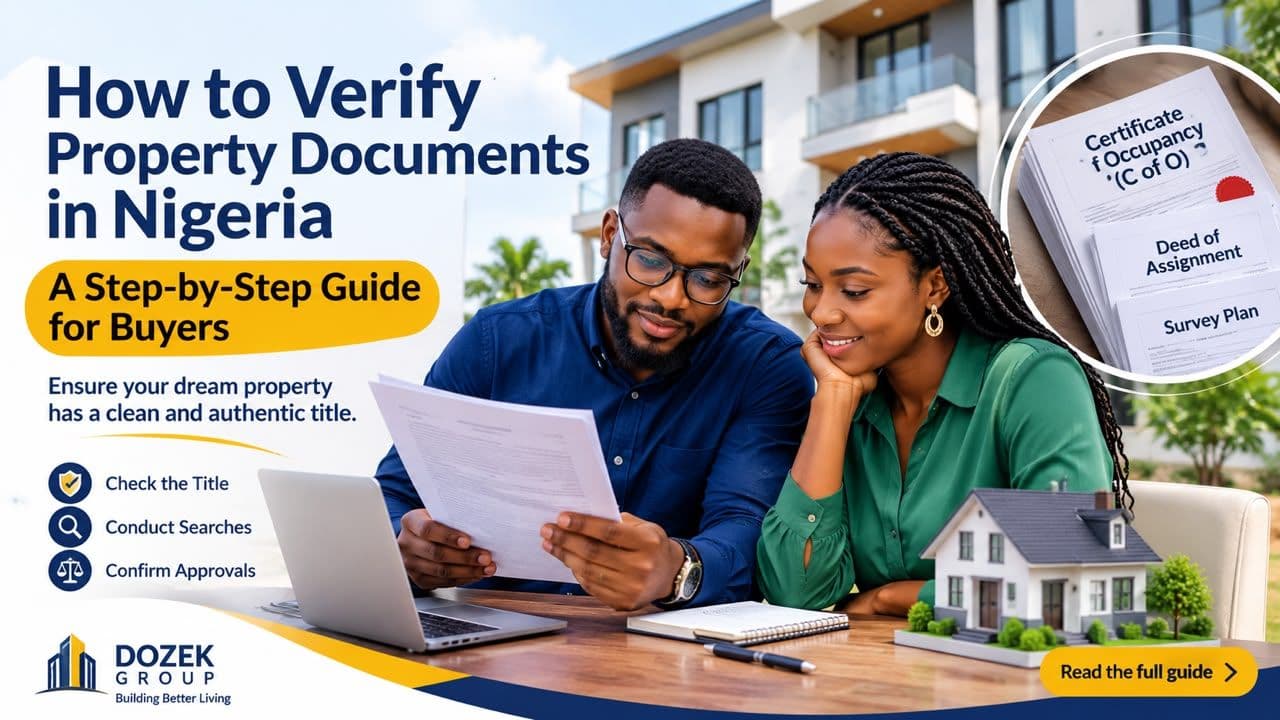
Buying property in Nigeria is an important financial decision, and one of the biggest mistakes a buyer can make is paying for a property without properly checking its documents.
A property may have an attractive price, a beautiful location and a convincing seller, but do you know whether the person selling it has the legal right to do so? Property documentation is more than paperwork. It helps establish ownership, identify the land or building, reveal possible disputes and show whether the transaction can legally proceed.
Whether you are buying land, a completed apartment, a house or an off-plan property in Lagos, understanding the documents involved can help you avoid costly mistakes.
1: Understand the important property documents
Before beginning verification, you need to know which documents to request from the seller or developer.
Different properties have different ownership histories, so not every transaction will involve exactly the same documents.
Here are some common documents you may encounter.
1: Certificate of Occupancy (C of O)
A Certificate of Occupancy, commonly called a C of O, is a document issued by the relevant state government in connection with a statutory right of occupancy over a defined property. It is important because it provides evidence of the right granted over the land. However, having a C of O does not automatically mean every aspect of the property's ownership is free from problems.
You still need to verify its authenticity, registered details, history and any interests or restrictions affecting the property.
2: Deed of Assignment
A Deed of Assignment is a legal document used to record the transfer of an interest in property from one party to another.
For example, if someone acquired a property and later decides to sell it, the deed helps document the transfer to the new buyer.
When reviewing it, check that the names of the parties, property description, execution details and relevant consent or registration information are consistent with the transaction and title history.
3: Survey Plan
A Survey Plan identifies the location, measurements and boundaries of a parcel of land. It helps establish exactly which land is being sold and whether the land shown in the documents corresponds with the physical property.
A survey plan should be checked by an appropriately qualified surveyor. Do not rely only on the seller pointing out the land or showing you a drawing.
Governor's Consent. Under the Land Use Act, certain transactions involving the transfer or alienation of statutory rights of occupancy require the Governor's consent.
This is particularly important when a property has changed hands after the original grant.
The exact consent requirements depend on the type of right and transaction, so a property lawyer should advise on what applies to your purchase.
Other documents you may encounter
Depending on the property's ownership history, you may also need to examine:
- Registered Deed of Assignment: Evidence of a previously documented transfer.
- Excision and Gazette: Government records relevant to certain land releases from acquisition.
- Power of Attorney: A document authorizing another person to act on behalf of the property owner, subject to its terms and validity.
- Probate or Letters of Administration: Documents relevant when property is being sold or transferred through an estate.
- Building and planning approvals: Relevant records for properties that have been developed or are under construction.
The important point is to establish the complete ownership history, not simply collect as many documents as possible.
2. Confirm the seller has the legal right to sell:
One of the first questions to ask is: Who actually owns this property, and who has the authority to sell it? Sometimes the person marketing a property is an agent, family representative company representative or someone acting under a Power of Attorney. That does not automatically make the transaction invalid, but their authority must be established. Ask for the seller's identification and compare the details with the property documents.
If a company is selling the property, confirm the company's identity and the authority of the people representing it. Where an estate or inherited property is involved, investigate the relevant probate documents and authority of the personal representatives.
If the seller cannot clearly explain how they acquired the property or why they are authorized to sell it, pause the transaction until the matter is independently investigated.
3. Conduct an official search at the relevant Land Registry:
This is one of the most important steps in property verification.
An official land search helps establish whether the documents and ownership information presented by the seller correspond with the records held by the relevant government authority. For a property in Lagos, the appropriate starting point is the Lagos State Lands Bureau and Land Registry with the help of your property lawyer, request the relevant search using the property's title details and supporting documents.
Depending on the records and type of title, the search may help establish:
- The registered holder of the property interest.
- Whether the title details match the seller's documents.
- Whether registered mortgages or other encumbrances exist.
- Whether cautions or competing interests have been recorded.
- Whether the property description corresponds with the official records.
Do not assume that a photocopy, scanned certificate or document presented by an agent is genuine simply because it looks official.
Important: A land registry search is an essential part of due diligence, but it may not reveal every possible dispute or issue. Additional checks may still be necessary.
4. Verify the survey plan and physical location:
A property document may contain accurate-looking measurements, but you still need to confirm that the land exists where the seller says it does.
This is where survey verification becomes important.
Engage a registered surveyor to examine the survey plan and conduct the appropriate checks with the relevant Surveyor-General's office.
For land in Lagos, the verification process should help establish whether the survey information matches the location and whether there are relevant government acquisition, boundary or planning concerns.
You should also arrange a physical site inspection.
This is where survey verification becomes important.
Check that:
- The land boundaries correspond with the survey information.
- The measurements and location are consistent.
- There are no obvious encroachments or boundary disputes.
- The land is not affected by an identified road alignment, drainage setback or other restriction.
- The physical site matches what is being offered for sale.
A property can have a survey plan and still require further investigation. Never treat the existence of a survey document as complete proof that the land is safe to purchase.
5. Check for disputes, mortgages and other restrictions:
Before completing a purchase, investigate whether another person or institution has an existing interest in the property.
For example, the property may have been used as collateral for a loan, be involved in a court dispute or have competing ownership claims.
Your lawyer should determine whether additional searches are appropriate, including:
- Court searches for relevant ongoing litigation.
- Searches for registered mortgages or encumbrances.
- Probate checks where the property is inherited.
- Company records where a corporate seller is involved.
- Relevant community or family ownership inquiries where customary ownership is involved.
This is particularly important where the property has changed hands several times.
A seller may have a document showing their purchase, but your lawyer should also investigate the earlier ownership history to establish whether the seller acquired a valid interest.
6. Use an independent property lawyer:
Property verification involves legal and technical details that can be difficult to interpret without professional assistance.
A property lawyer should review the documents, investigate the ownership history, identify the relevant searches and advise you on the legal requirements for the transaction.
Your lawyer should also review the sale agreement before you sign it.
Do not rely entirely on the seller's lawyer or an agent to protect your interests. Having your own independent professional helps ensure that your questions and concerns are properly addressed.
A registered surveyor may also be needed to verify the property's location, boundaries and survey information.
The aim is to make sure the people checking the transaction are working in your interest.
7. Watch out for these property documentation warning signs:
Be careful if you encounter any of the following:
The seller refuses to provide documents for independent verification.
Names on the documents do not match the seller's explanation.
The property description or survey details are inconsistent.
The seller pressures you to make payment before checks are completed.
There are conflicting ownership claims.
The seller cannot explain the property's ownership history.
Payment is requested into an unrelated account without a clear explanation.
Important promises are made verbally but not included in the agreement.
These signs do not automatically prove fraud, but they are reasons to pause
and investigate further.
A good property opportunity should withstand reasonable questions and independent verification.
Frequently asked questions
- Can I verify property documents myself in Nigeria?
You can request and review documents yourself, but official verification often requires searches and professional interpretation. An independent property lawyer and qualified surveyor can help you identify the correct checks for the property.
- Is a Certificate of Occupancy enough to prove ownership?
Not on its own. A C of O is important, but you should still investigate the registered details, ownership history, possible encumbrances and the seller's authority to transact.
- Where can I verify land documents in Lagos?
Start with the Lagos State Lands Bureau and relevant Land Registry for title searches. Survey plans should also be checked through the appropriate Surveyor-General's office with the help of a qualified surveyor.
- What happens if a property has no Certificate of Occupancy?
Not every property has a C of O. Some properties may have other forms of title or documented interests. Whether the available documentation is sufficient depends on the property's history and legal status. Have a property lawyer investigate it before proceeding.
- Should I pay for a property before verifying its documents?
It is safer to complete the necessary due diligence before making a substantial or non-refundable payment. If any preliminary booking arrangement is proposed, have its terms reviewed and documented by your lawyer first.
A property purchase deserves more than trust alone
Buying property is a major commitment, and proper documentation should never be treated as an afterthought.
From confirming ownership to checking survey details and investigating possible restrictions, every stage of verification helps you understand exactly what you are purchasing.
At Dozek Group, we believe that informed property decisions begin with asking the right questions, understanding the details and taking the necessary steps before making a commitment.
Whether you are considering land, a completed apartment or an off-plan development, take the time to understand the property and its documentation.
Explore Dozek Group's available proprieties, learn about our property development service, or contact our team for further inquiries.
Thinking about your next property purchase?
Let's help you take the next step with better information.
Call: +234 808 251 8441 / +234 706 441 1391
Email: sales@dozekgroup.com
Website: www.dozekgroup.com